The Luxury of Flexible Accommodation Evolves: How will Branded Residences Adjust Rates in a Maturing Market?

The segment of the branded residenceswhich fuses the comfort of a home with the services of a luxury hotel, is undergoing a remarkable maturation globally. As this niche of the Flexible Accommodation is gaining ground, driven by interest from hotel brands and, increasingly, from non-hotel luxury firms, the way in which their management fees are structured is about to evolve.

Historically, large hotel chains have dominated this space, imposing fees that, while guaranteeing a high level of service and brand recognition, could be substantial. However, with the entry of more players, the market dynamics are changing. The increasing competition is forcing a re-evaluation of business models and, in particular, of the fee structures for the management of these exclusive properties.

This maturation of the sector is expected to lead to a further flexibility and customisation in commissions. Developers and owners, with more branding options at their disposal, will seek arrangements that balance brand visibility and quality of service with optimising their returns. This could lead to greater diversity in fee models, including more variable or hybrid structures, rather than fixed percentages of revenue or profit.

A key factor in this development is the increasing interest of non-hotel brands -such as fashion houses, automobile manufacturers or design groups - in the field of branded residences. These brands, while lacking traditional hotel infrastructure, bring a design, aesthetic and lifestyle differentiator that is highly valued by the luxury buyer. Their entry into the market could put pressure for more innovative partnership models, perhaps with commissions more closely linked to the delivery of specific brand value or the generation of a unique experience, beyond pure hotel operational management.

Transparency will be another crucial element. As the owners of branded residences become more sophisticated and aware of their rights and return expectations, they will demand greater clarity on how fees are calculated, what services are included and how operating expenses are optimised. This will lead to a standardisation of certain contractual aspects, but also to more customisation in negotiation.

Ultimately, the maturation of the branded residences is not only a sign of growth, but also of sophistication. Rate structures will adapt to reflect more intense competition and the demands of an industry seeking an optimal balance between brand prestige, level of service and financial viability for owners and developers in this exclusive segment of the market. Flexible Accommodation.

The next Vitur events will be held in Madrid el 15 de octubre and in Seville on November 26th, and will once again be the meeting point for operators, investors and companies in the sector to boost their business, establish strategic alliances with the various stakeholders involved and access all the news, trends and opportunities in the sector from leading speakers and companies.

Continue reading

Vista aérea de un barrio nuevo de Madrid al atardecer con bloques residenciales contemporáneos y grúas de obra, imagen ilustrativa del crecimiento del Alojamiento Flexible
Lima Sitúa en 40.000 las Camas de Alojamiento Flexible para 2030 y Atribuye a Madrid el 72% de lo que Hoy se Construye
La consultora especializada calcula que España alcanzará 40.000 camas de Alojamiento Flexible en cuatro años y que el stock se duplicará ya en 2028. Madrid concentra el 60% de lo operativo y el 72% de las más de 14.000 camas en obras, mientras la firma estrena área de transacciones.
Fachadas de edificios de viviendas del centro de una ciudad mediterránea con balcones y persianas, imagen ilustrativa del control municipal de las viviendas de uso turístico
Valencia Sanciona con 1,5 Millones a 138 Viviendas Turísticas Ilegales y Gana en los Tribunales sus Dos Primeros Recursos
El Ayuntamiento ha cerrado con multa 138 de los 283 expedientes abiertos desde que asumió la competencia en marzo de 2025, por más de 1,5 millones de euros. Dos sentencias firmes han confirmado ya las sanciones recurridas, y eso cambia el cálculo de riesgo para quien opera sin cumplir los requisitos.
Sala de reuniones acristalada de una oficina contemporánea al atardecer con vistas a una ciudad europea, imagen ilustrativa de la captación de capital institucional para residencias de estudiantes
Westwind Cierra 200 Millones para su Fondo Europeo y Rebasa los 400 Bajo Gestión Tras la Compra a Merkel
El vehículo de Daniel Gorzawski ha levantado unos 200 millones en el primer cierre de Werep, con una aseguradora europea y un family office estadounidense entre sus inversores. Llega justo después de comprar a Merkel las residencias de estudiantes de Madrid, Valencia y Granada, y eleva sus activos bajo gestión por encima de los 400 millones.
Sala común luminosa de una residencia contemporánea con sofás, mesas de trabajo y grandes ventanales, imagen ilustrativa del segmento de Alojamiento Flexible y residencias de estudiantes
Activum Lanza Dos Marcas de Living y Fía su Plan a Activos Pequeños: 1.000 Camas Bajo Gestión en 2027
La gestora ha presentado ArrayGo, para residencias de estudiantes, y Kroma Living, para Alojamiento Flexible, con las que quiere superar las 1.000 camas en España a finales de 2027. Su apuesta va a contracorriente: edificios de 150 a 200 camas, cuando el resto del sector promueve por encima de las 300.
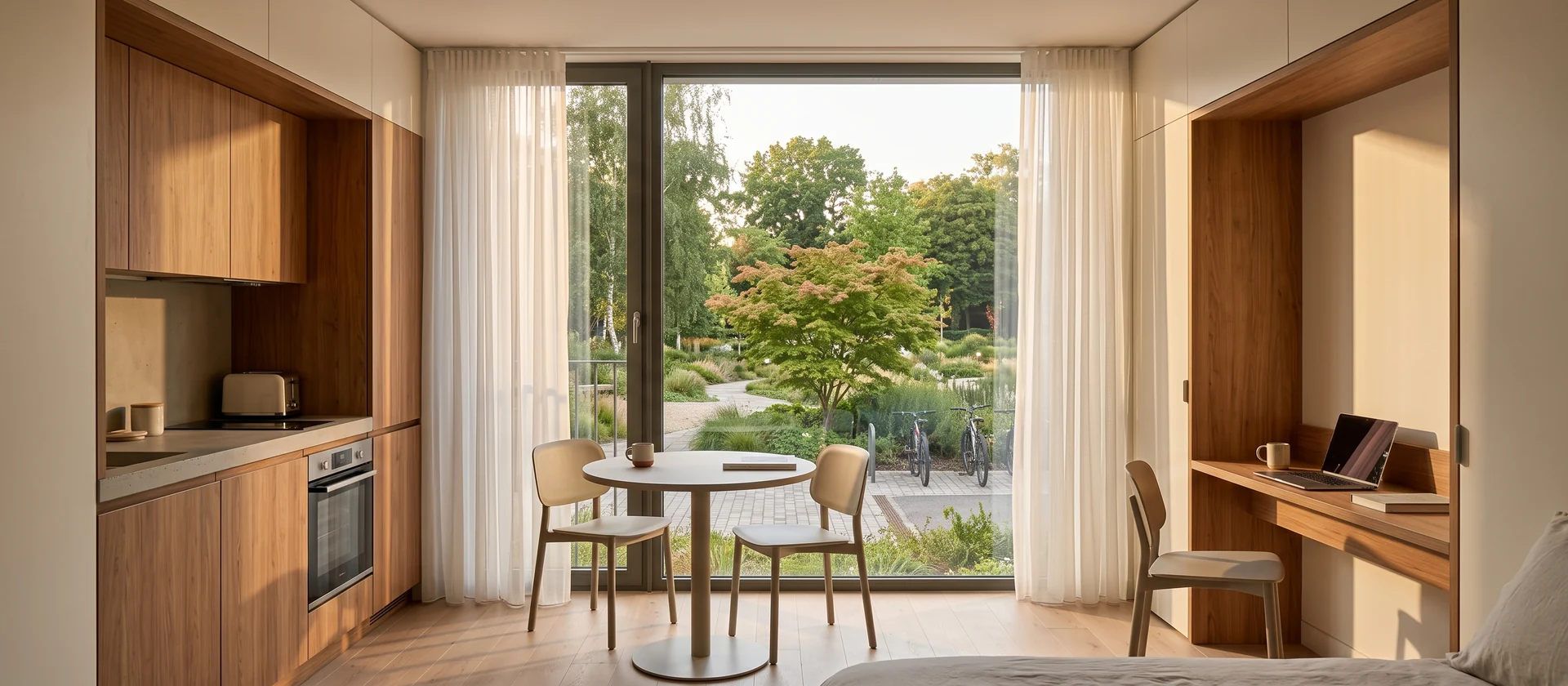
Interior de un apartamento compacto con cocina integrada y zona de trabajo en un edificio de Alojamiento Flexible, con luz natural y vistas a un patio ajardinado, imagen ilustrativa
Momentum Cifra en 350 Euros al Mes la Ventaja del Alojamiento Flexible y Eleva su Cartera a 8.000 Camas
La gestora que fundó Gabriel Fernández de Gamboa en 2008 ha llevado el Alojamiento Flexible a unas 8.000 camas, con tickets por debajo de 1.000 euros al mes y 5.000 unidades en desarrollo. Su cuenta es sencilla: un piso convencional sale entre 350 y 400 euros más caro cuando se suman suministros, muebles y servicios.
Manos sosteniendo un teléfono móvil con la pantalla en blanco en la terraza de un café de una ciudad europea, con fachadas de viviendas al fondo, imagen ilustrativa de la búsqueda de alojamiento
Google Desmonta en Europa el Escaparate de la Vivienda Vacacional: Adiós a los Filtros de Fecha y a los Precios en Vivo
Google ha eliminado la sección de alquileres vacacionales de su página de resultados en Europa y ha recortado los filtros de fechas y los precios en tiempo real de los proveedores directos. El motivo es la DMA y la multa de 460 millones de julio, y el efecto llega de lleno al Alojamiento Flexible.