The New Capital Haven: Student Residences Overtake Traditional Renting as Favourite Flexible Accommodation Investment

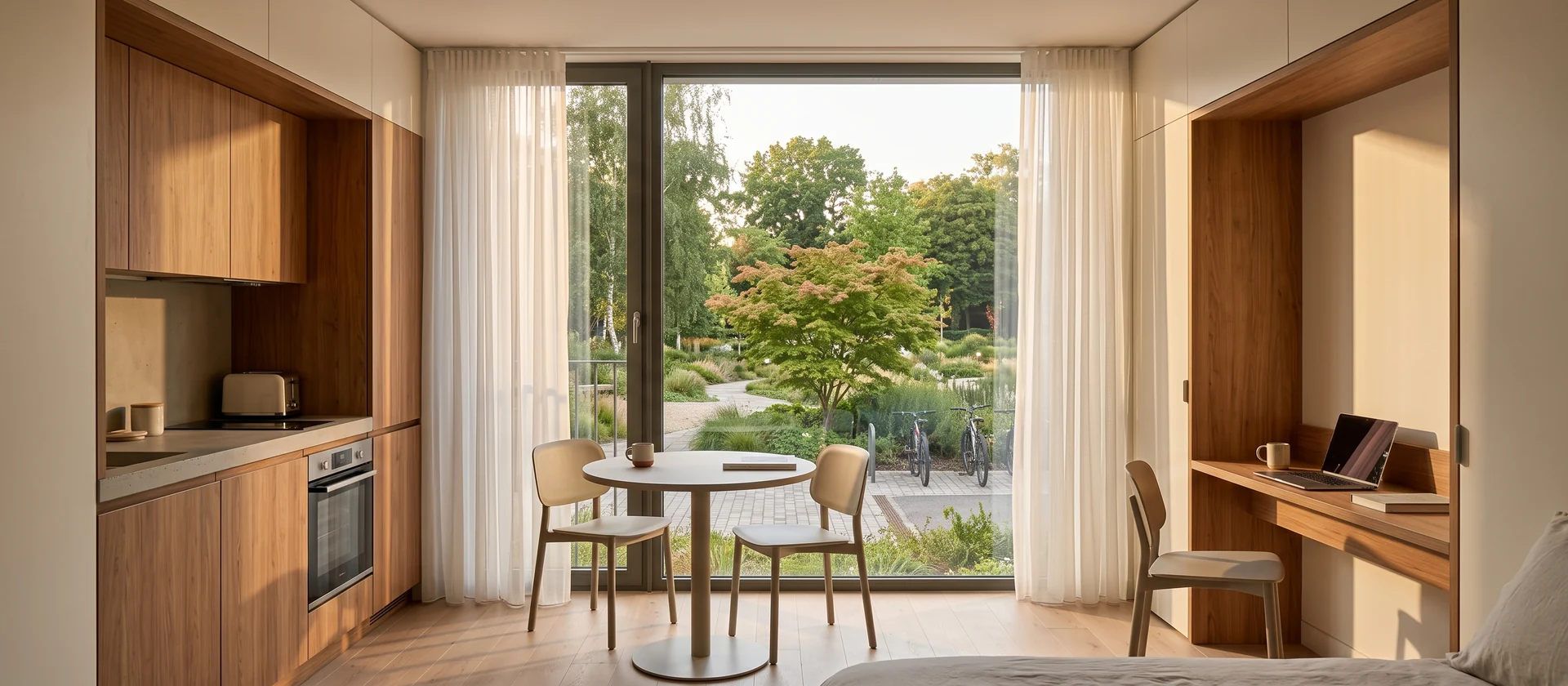
The real estate investment map in Spain is being redefined, and one segment in particular is shining brightly: student residences. This asset, a fundamental part of the Flexible Accommodationhas overtaken traditional rental housing as the preferred destination for investment capital, confirming a growing trend towards specialisation and the search for more profitable and stable models.

Forecasts for 2024 are strong: the volume of investment in student halls of residence is expected to reach 700 millionwith projections that could even approach the 1 billion. This would represent a significant increase in the 40% with regard to the 500 million euros invested by 2023. A leap that reflects the market's confidence in the strength and growth potential of this asset class.

The attractive returns offered by these investments are a key factor. The yields (yields) prime for student halls of residence are in a competitive range of 4,5% to 4,75%. This return is considerably higher than what is currently observed in the traditional rental housing market, where yields range from 3,5% and 4%.

But it is not just a question of numbers. The student residence sector is perceived as "resilient" due to structurally robust demand. Spain has more than 1.7 million university studentsof which a significant 13% are internationalThis ensures a constant flow of occupancy. However, the current supply of beds barely exceeds the number of beds available. 115.000generating an estimated deficit of between 100,000 and 200,000 beds to fully meet existing demand. This gap creates an enabling environment for new investments and developments.

Increasing regulatory uncertainty in the traditional rental market, exacerbated by regulations such as the Housing Act and price control measures, has diverted investor interest. Faced with a legal framework that may be perceived as less favourable or with higher risks, institutional funds, both national and international, are looking for safer and more profitable alternatives. In this scenario, the Flexible Accommodationwhich includes both student residences and coliving and other mid-stay models, emerges as a "safe haven" for capital.

The future expansion of this segment is promising. A continuous development of new projects is anticipated, especially in the large university cities of the country, such as Madrid, Barcelona, Valencia, Seville and Malaga, which concentrate most of the student population and, therefore, the demand of Flexible Accommodation quality.
The next Vitur events will be held in Madrid, 1 October and in Seville on November 26th, and will once again be the meeting point for operators, investors and companies in the sector to boost their business, establish strategic alliances with the various stakeholders involved and access all the news, trends and opportunities in the sector from leading speakers and companies.

Continue reading

Grupo Salas Irrumpe en el Flex Living: 1.500 Unidades y Alianza Estratégica para Conquistar Madrid, Barcelona, Valencia y Málaga
El grupo inmobiliario, con más de 30 años de trayectoria y 4.000 viviendas entregadas, lanza una nueva división que abarca Flex Living, Senior Living y hoteles. En su vertical de Alojamiento Flexible, ya tiene suelos en proceso de adquisición y un operador nacional como socio para desarrollar un portfolio mid-market dirigido a profesionales jóvenes y cuentas corporativas.
Extremadura Redefine el Mapa Turístico: El Slow Tourism Como Alternativa al Modelo de Masificación en España
La región más inexplorada de la Península se posiciona como destino estratégico para el Alojamiento Flexible orientado al turismo experiencial y sostenible. Con tres Patrimonios de la Humanidad, ecosistemas únicos como la dehesa ibérica y cielos certificados Starlight, Extremadura ofrece a operadores e inversores un territorio de baja competencia y alta autenticidad en un contexto de saturación turística en los destinos tradicionales españoles.
Be Mate Accelerates in Málaga: Three New Buildings and a Forecast of 45,000 Customers by 2026
La plataforma especializada en gestión integral de Alojamiento Flexible incorpora Be Mate Málaga Catedral, Be Mate Playa y Be Mate Málaga Soho entre noviembre de 2025 y febrero de 2026, consolidando la capital de la Costa del Sol como mercado estratégico y reforzando su modelo data driven bajo la presidencia de Cristian Flórez.
Málaga Freezes Tourist Growth: Three-Year Moratorium on New Hotel and Apartment Licences
The Málaga City Council has approved a moratorium of up to three years – from August 2025 to August 2028 – which suspends the granting of new licenses for tourist homes and hotel establishments throughout the city. 12,754 VUT recorded y 8,596 active, The mayor, Francisco de la Torre, justified the measure as the third phase of a progressive containment strategy initiated in June 2024, with the aim of reformulating the PGOU and making Flexible Accommodation compatible with the right to housing. The halt comes at a time when the registration of new tourist flats in the capital was still growing. 3,8%, facing 10,5% of the province and the 11,5% of Andalusia.
Andalusia Consolidates its Leadership in Flexible Accommodation: 271% of National Investment and 401% of Operations
The Andalusian community is positioned as the second-largest recipient of capital in short-stay Flexible Accommodation in Spain and the absolute leader in transaction numbers, according to data from Savills presented at the Vitur Summit 2026. Málaga and Seville are emerging as the main hubs for national and international investors in Flex Living.
The Supreme Court Overturns the Single State Register of Tourist Flats: Infringement of Regional Competences
Ruling No. 620/2026, issued on 19 May, declares null and void the provisions of Royal Decree 1312/2024 that created the national register of short-term rentals, in a decision that reorders the regulatory map of Flexible Accommodation in Spain and returns control over their own Tourist Accommodation registration systems to the autonomous communities.