Flex Living leads residential investment in Spain

In recent years, the Flexible Accommodation sector in Spain has experienced a notable increase in investment, reflecting a significant change in the preferences of both investors and users.

Growth of investment in Flexible Accommodation
According to recent data from Savills, approximately €1.5 billion was allocated to flexible rental solutions such as flex-living and coliving in 2024. The volume recorded has exceeded €8.3 billion of direct investment in real estate assets, compared to €7,228 million in the same period last year, an increase of 15%, showing a clear trend towards these alternative housing formats.

This growth is even more significant if we consider that, in the previous three years, investments in these formats only accounted for 10% of the total volume, while the multifamily model accounted for 90%.

The current trend shows a rotation of investment towards more flexible options adapted to the changing needs of society.

Drivers of investment
Several factors have contributed to this boom in investment in Flexible Accommodation in Spain:

  1. Growing demand for flexibility: young professionals and digital nomads alike are looking for housing options that allow them to adapt to more dynamic lifestyles, without the constraints of traditional rental contracts.
  2. Attractive returns: Short-term rentals tend to offer higher returns compared to traditional rentals, especially in high-demand tourist and urban areas.
  3. Diversification of the real estate market: Investors are looking to diversify their portfolios, and flexible accommodation offers attractive opportunities in an ever-changing real estate market.

Future perspectives
The outlook for the Flexible Housing sector in Spain is optimistic. Investment is expected to continue to rise, driven by demand for more adaptable housing options and investors' search for higher returns. In addition, the consolidation of models such as coliving and flex living could redefine the residential landscape in Spain's major cities.

Currently, almost all flex living supply is located in Madrid. However, this supply is expected to grow, with increasing activity in cities such as Malaga, the outskirts of Barcelona and Bilbao.

According to Atlas Real Estate data, the number of flex living beds will rise to 26,776 units by 2027, up from 11,885 operational beds in 2024.

In conclusion, the notable increase in investment in flexible accommodation in Spain reflects an adaptation of the market to new social and economic demands. This phenomenon offers opportunities for both investors and users looking for housing alternatives that are more in line with current trends.

In the next edition of the Vitur Summit we will analyse in depth the trends and future of Flexible Accommodation with leading figures from Savills, Colliers and Idealista. If you are a professional in the sector, you can't miss it. Article sources: Savills, Colliers, News BBVA, Idealista, Ejeprime, Atlas.

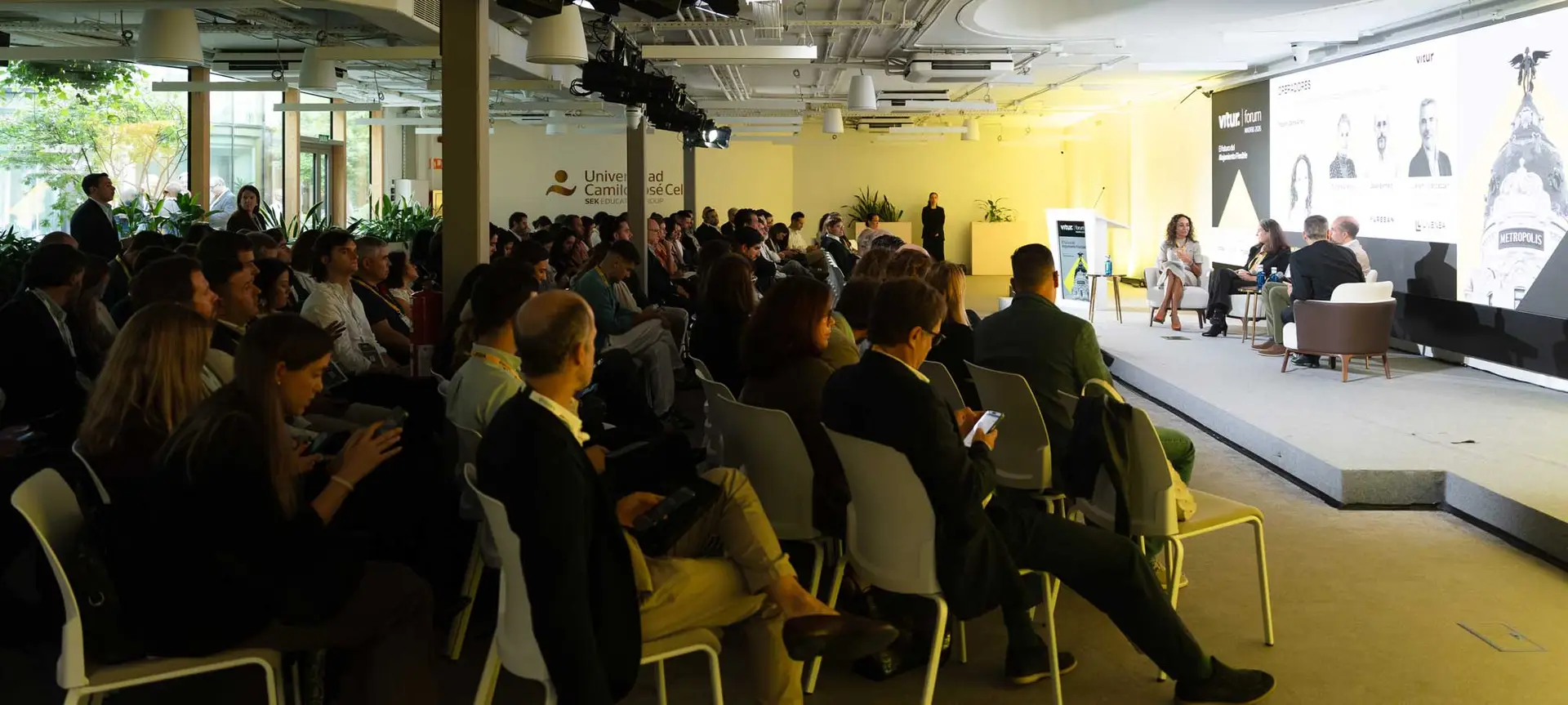
The next Vitur events will be held in Madrid el 15 de octubre and in Seville on November 26th, and will once again be the meeting point for operators, investors and companies in the sector to boost their business, establish strategic alliances with the various stakeholders involved and access all the news, trends and opportunities in the sector from leading speakers and companies.

Continue reading

Detalle de un cuadro eléctrico y contadores modernos en el cuarto de instalaciones de un edificio residencial, ilustrativo de la digitalización de la gestión de suministros
Cuatro Proptech Atacan lo que la Promoción Sigue Haciendo a Mano: Suministros, Preventa, Liquidez Sénior y Grietas
El Clúster de la Edificación, Asprima y la Universidad Politécnica de Madrid reunieron a cuatro compañías tecnológicas que no venden vivienda, sino que arreglan procesos internos del sector. Zenova digitaliza los suministros, Framearq lleva la realidad virtual a la preventa, Jubenial busca liquidez para el propietario mayor y Feelbat monitoriza estructuras con sensores.
Calle de un desarrollo urbano reciente en el norte de Madrid con bloques residenciales contemporáneos, aceras anchas y arbolado joven, ilustrativa del ecosistema de Alojamiento Flexible de Valdebebas
Valdebebas Reúne 5.641 Unidades de Alojamiento Flexible y Seis Operadores: Apenas el 28% Está en Explotación
El barrio del norte de Madrid concentra 5.641 unidades operativas o en desarrollo, según el departamento de Advisory de Activum. De ellas, apenas 1.603 funcionan ya: por cada unidad en explotación hay dos y media en obra. Seis operadores conviven en el mismo ámbito, algo que no ocurre en ningún otro punto de España.
Vista aérea de una gran ciudad española con bloques residenciales y grúas de obra, ilustrativa del volumen de inversión en el mercado living español
El Multifamily Acapara el 78% del Living Español: al Alojamiento Flexible le Llegan 425 de 4.593 Millones
El informe Snapshot de Living de Colliers cifra en 4.593 millones de euros la inversión del primer semestre en España. El multifamily se lleva 3.560, las residencias de estudiantes 608 y el Alojamiento Flexible 425. España invierte a un ritmo del 323% de su media de los últimos cinco años, frente al 85% europeo.
Edificio de oficinas de mediados del siglo XX en el barrio de Salamanca de Madrid en proceso de reconversión en estudios de Alojamiento Flexible
Simplifika Convierte unas Oficinas Obsoletas del Barrio de Salamanca en Alojamiento Flexible bajo el Modelo de Limehome
El proyecto MA18 transformará un edificio de 1.166 metros cuadrados en la calle Maestro Alonso, vacío y funcionalmente agotado como oficinas, en estudios de alto standing repartidos en cinco plantas. Operará con el sistema digitalizado de Limehome, que automatiza el registro y el acceso de los huéspedes.
Edificio urbano de apartamentos con servicios vacío al anochecer, ilustrativo del cese de operaciones del operador Sonder y la venta de su marca
De Sonder Solo Queda el Nombre: TravelAI Compra la Marca sin Edificios, sin Contratos y sin Equipo
La canadiense TravelAI se ha quedado con las marcas registradas y los dominios de Sonder, pero no con sus edificios, sus contratos de arrendamiento, su inventario ni su plantilla. El operador de apartamentos con servicios liquidó su negocio en noviembre, después de que Marriott rompiera el acuerdo de licencia que los unía.
Balcones de un edificio de apartamentos turísticos en una ciudad andaluza, ilustrativos del debate fiscal sobre el IVA aplicable al alojamiento profesional
Las Patronales Andaluza y Catalana Cierran Filas contra el IVA del 21%: Reclaman el Mismo Trato Fiscal que los Hoteles
AVVAPro y Federatur han formado un frente común contra la subida del IVA al 21% que el Gobierno ha aplazado a septiembre por falta de apoyos parlamentarios. Junto a otras asociaciones suman el 60% de la oferta profesional de España y reclaman el mismo trato fiscal que los hoteles, que tributan al 10%.