The Big Challenge is Understanding the New Consumer»: Borja Sierra Unpacks the Future of Real Estate and Flexible Accommodation

The real estate sector is at a crossroads, a turning point where technology, new business models and changing social demands are redefining the rules of the game. To navigate this new paradigm, it is essential to listen to expert voices such as that of Borja Sierra, The European chairman of consultancy Savills, who recently shared his views in an in-depth interview with EjePrime.

Sierra, with a track record that has allowed him to witness several market transformations, is blunt in pointing out what the biggest challenge is today: «understanding the new consumer». Far from being a passive actor, today's customer is hyper-informed, technologically savvy and demands personalised, high quality experiences, whether in the retail, in the office or in the residential area.

One of the areas where this transformation is most evident is in the Flexible Accommodation. Sierra highlights how this segment, which spans from the branded residences until coliving or student residences, has emerged to respond to these new needs. It is not just about providing a roof over your head, but about creating communities, providing value-added services and ensuring flexibility that traditional renting often cannot offer.

The artificial intelligence is another major catalyst for change that Sierra identifies. Its impact will be felt at every level, from optimising asset management and personalising the customer experience, to transforming design and construction. The ability to analyse large volumes of data will enable more informed decisions and anticipate market trends.

In the interview, Borja Sierra also reflects on the importance of the sustainability (ESG), The need for more efficient and environmentally friendly buildings is no longer an option, but an imperative. Investors and consumers are demanding more efficient and environmentally friendly buildings, and this factor has become a key element in the assessment and viability of projects.

Borja Sierra's vision is a call for adaptation and innovation. His analysis reminds us that success in the real estate of the future will depend not only on the quality of the brick, but on the ability to understand and serve a consumer that has changed forever.

To deepen his reflections on market developments, the impact of technology and the opportunities that lie ahead in the Flexible Accommodation, We invite you to read the full interview in its original source.

Read the full interview with Borja Sierra in EjePrime here: Borja Sierra (Savills): “The great challenge is to understand the new consumer, who has all the information”.”

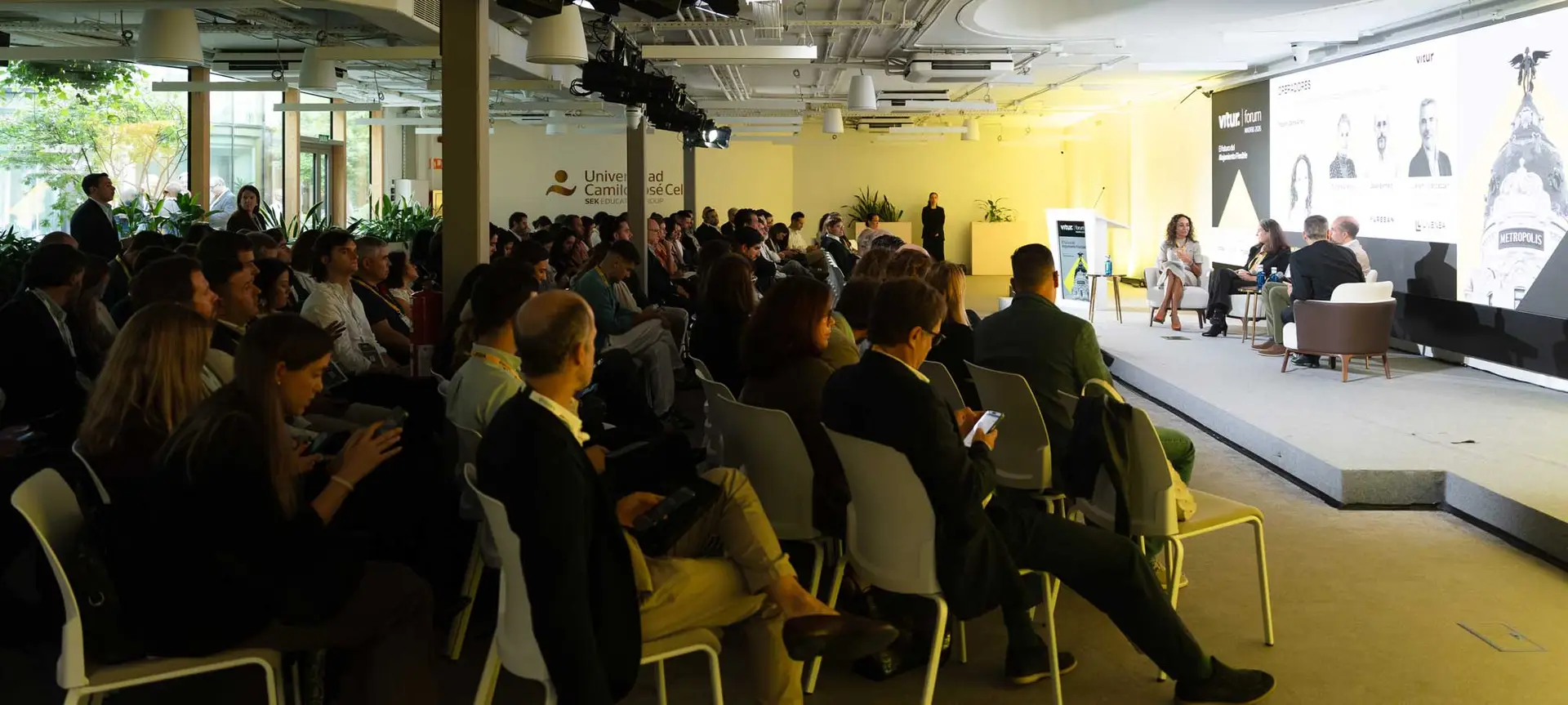
The next Vitur events will be held in Madrid el 15 de octubre and in Seville on November 26th, and will once again be the meeting point for operators, investors and companies in the sector to boost their business, establish strategic alliances with the various stakeholders involved and access all the news, trends and opportunities in the sector from leading speakers and companies.

Continue reading

Piscina y terraza de un hotel mediterráneo de estilo italiano de los años sesenta al atardecer, ilustrativa del segmento lifestyle premium en Ibiza
De Operar a Poseer: Grupo Ramat Paga 60 Millones por el Mongibello Ibiza, el Hotel que Fue de la Familia Matutes
Stoneweg y Bain Capital han vendido al Grupo Ramat y a un grupo de inversores privados el hotel que compraron en 2022 y reposicionaron después. El comprador es la misma casa que lleva cuatro años gestionándolo, y su consejero delegado, Marc Rahola Matutes, recupera así un activo que perteneció a Palladium Hotel Group, el grupo de su familia.
Interior luminoso de un estudio con cocina integrada y balcón abierto a una calle del centro histórico de una ciudad andaluza, ilustrativo del formato de apartamento turístico
OD Hotels Estrena en el Centro de Málaga 22 Apartamentos sin Restaurante, sin Bar y sin Recepción al Uso
Ocean Drive Málaga ha abierto en Cortina del Muelle con 22 apartamentos turísticos y una lista de ausencias que define el proyecto: no hay restaurante, ni bar, ni terraza, ni zonas comunes de peso. La llegada del huésped se resuelve en un hall con una mesa. La cadena lo resume en una frase: el barrio es el lobby.
Villa de estilo colonial con piscina y palmeras en un complejo turístico del Caribe al atardecer, imagen ilustrativa del segmento de las branded residences
Los Propietarios de un Four Seasons del Caribe Reclaman 100 Millones: la Letra Pequeña de las Branded Residences
Pagaron 100.000 dólares de entrada y más de 13.000 al año para vivir bajo una de las marcas más reconocidas de la hostelería de lujo. Cuatro años después de un incendio, los dueños de 89 villas del Four Seasons Resort Nevis dicen que solo hay una valla rodeando los escombros, y han llevado a la propiedad ante los tribunales de Delaware.
Recepción automatizada vacía de un edificio de apartamentos con un terminal de autoservicio junto a la entrada, ilustrativa del peso de la tecnología en la operativa del alojamiento
Booking Sitúa en Menos del 1% las Noches que le Llegan desde la IA, y en Doble Dígito el Ahorro que sí le Está Dando
El director financiero del mayor grupo de distribución turística del mundo puso cifra a algo de lo que el sector lleva dos años hablando sin datos: las reservas que llegan a Booking desde los modelos de lenguaje no alcanzan el 1% de sus noches y llevan trimestres sin moverse. Donde la inteligencia artificial sí está dejando dinero es en la atención al cliente.
Detalle de un cuadro eléctrico y contadores modernos en el cuarto de instalaciones de un edificio residencial, ilustrativo de la digitalización de la gestión de suministros
Cuatro Proptech Atacan lo que la Promoción Sigue Haciendo a Mano: Suministros, Preventa, Liquidez Sénior y Grietas
El Clúster de la Edificación, Asprima y la Universidad Politécnica de Madrid reunieron a cuatro compañías tecnológicas que no venden vivienda, sino que arreglan procesos internos del sector. Zenova digitaliza los suministros, Framearq lleva la realidad virtual a la preventa, Jubenial busca liquidez para el propietario mayor y Feelbat monitoriza estructuras con sensores.
Calle de un desarrollo urbano reciente en el norte de Madrid con bloques residenciales contemporáneos, aceras anchas y arbolado joven, ilustrativa del ecosistema de Alojamiento Flexible de Valdebebas
Valdebebas Reúne 5.641 Unidades de Alojamiento Flexible y Seis Operadores: Apenas el 28% Está en Explotación
El barrio del norte de Madrid concentra 5.641 unidades operativas o en desarrollo, según el departamento de Advisory de Activum. De ellas, apenas 1.603 funcionan ya: por cada unidad en explotación hay dos y media en obra. Seis operadores conviven en el mismo ámbito, algo que no ocurre en ningún otro punto de España.