The Supreme Court Overturns the Single State Register of Tourist Flats: Infringement of Regional Competences

The Supreme Court You have landed a decisive blow against the model of centralised control of the Holiday Homes in Spain. In his Judgment No. 620/2026, delivered on 19 May by the Contentious-Administrative Chamber, the high court annuls the precepts of the Royal Decree 1312/2024 which they created Register of Short-Term Leases, considering that the State lacks the competence to impose a national system that overlaps with existing regional registers.

The judgment partially upholds the appeal lodged by the Generalitat Valenciana, which had the backing of the Junta de Andalucía and the Government of the Canary Islands. The ruling is surgical: it does not annul the decree in its entirety, but exclusively the precepts that frame the single registration itself, including the obligation to obtain a state registration number to advertise housing on platforms such as Airbnb o Booking. What remains in force are the provisions relating to the single digital gateway, the data transmission obligations of online platforms, and the exchange of information for statistical purposes.

The Supreme Court's legal reasoning is compelling. The court considers that the Ministry of Housing it went far beyond establishing common ground: it regulated in a «detailed» the entire registration procedure, from the required documentation to the automatic assignment of a registration number and error correction mechanisms. This level of detail, in the magistrates' opinion, exceeds the state's economic and tourism responsibilities. The ruling also dismisses the argument of European transposition: the Regulation (EU) 2024/1028, claimed as a cover by the Executive, does not require the registration system to be nationwide, nor does it alter the internal distribution of powers within each Member State.

The legal appraisal of the lawyer Juan Ramón Méndez Martos Summarise the four vectors that led to the annulment:

  • Invasion and overreach of state powers into regional ones regarding tourism.
  • Duplicate records, with overlap on systems already operational in various communities.
  • Limitations to Market Unit Guarantee.
  • Attribution of a public-law nature to Land Registries, which lack that administrative character.

Political reactions reflect the depth of the institutional conflict. The Ministry of Housing defends that the registration brought to light more than 110,000 illegal rental contracts26.000 only in Andalusia— and which, during their validity, were registered 258,000 tourist flats y 83,000 seasonal rentals. Official sources are now shifting responsibility to the autonomous communities, urging them to «speed up checks and inspections.» From Valencia, the regional minister Marián Cano He claimed the immediate enforcement of the sentence and the opening of a new stage of institutional dialogue.

For the sector of Flexible Accommodation, the ruling opens up a scenario of greater regulatory fragmentation in the short term: operators and platforms will have to navigate between disparate regional frameworks, without the reference of a single registration number. The challenge that remains on the table is the same one that the Supreme Court acknowledges as legitimate: to articulate effective coordination mechanisms between administrations that identify assets and owners, but without that coordination leading to unconstitutional centralisation. How to solve that equation —and within what timeframe— will determine the next phase of the regulation of Flexible Accommodation in Spain.

The next Vitur events will be held in Madrid el 15 de octubre and in Seville on November 26th, and will once again be the meeting point for operators, investors and companies in the sector to boost their business, establish strategic alliances with the various stakeholders involved and access all the news, trends and opportunities in the sector from leading speakers and companies.

Continue reading

Edificio residencial contemporáneo de media altura en una avenida urbana arbolada de una ciudad mediterránea, ilustrativo de una residencia de estudiantes
Livensa Suma 400 Camas de Estudiante en Barcelona: la Misma Ciudad Recorta Licencias de Alquiler de Corta Duración
Livensa Living ha abierto su cuarta residencia en Barcelona, con 400 camas en la Avinguda del Paral·lel, coincidiendo con el arranque del curso. La apertura llega en la misma ciudad que lleva dos años estrechando el cerco sobre el piso turístico: la misma actividad de alojar, dos categorías de licencia y dos destinos opuestos.
Bloques de viviendas de una gran ciudad europea al atardecer, con fachadas de distintas épocas, imagen ilustrativa del debate sobre el acceso a la vivienda
Bruselas No Prohíbe, Habilita: el Borrador que Daría Cobertura Legal a las Ciudades para Limitar la Vivienda no Habitual
Un borrador de la Affordable Housing Act al que han tenido acceso Euractiv y Reuters permitiría a las ciudades limitar el uso de vivienda residencial para fines distintos de la residencia principal. Contempla topes cuantitativos y cláusulas de derecho adquirido para los operadores ya establecidos, y exige demostrar tres años de perjuicio antes de aplicar cualquier restricción.
Fachada de un bloque de apartamentos frente al mar en la costa mediterránea española, con balcones y toldos, en un día de verano
Los Apartamentos Turísticos Repiten Julio con un 6,2% más de Precio y Estancias un 7,3% más Cortas
Las pernoctaciones en apartamentos turísticos no se movieron ni un punto en julio respecto al año pasado, según el INE. Lo que sí cambió fue todo lo demás: los precios subieron un 6,2%, la estancia media cayó un 7,3% hasta 4,8 noches y el cliente español ganó peso mientras el extranjero lo perdía.
Palacio histórico italiano rehabilitado junto a un lago al atardecer, ilustrativo de la rehabilitación patrimonial que exigen las residencias de marca en Italia
Marriott y Accor Empujan las Branded Residences en Italia, el País que se Quedó Atrás de España y Portugal
El desarrollo de residencias de marca en Italia ha ido por detrás del español y el portugués pese a tener los ingredientes a favor. Eso está cambiando: Marriott acaba de anunciar su primer proyecto residencial en el país y Accor ve recorrido en varias regiones. Savills calcula que el sector global pasará de unos 910 complejos terminados a cerca de 1.747 en 2032.
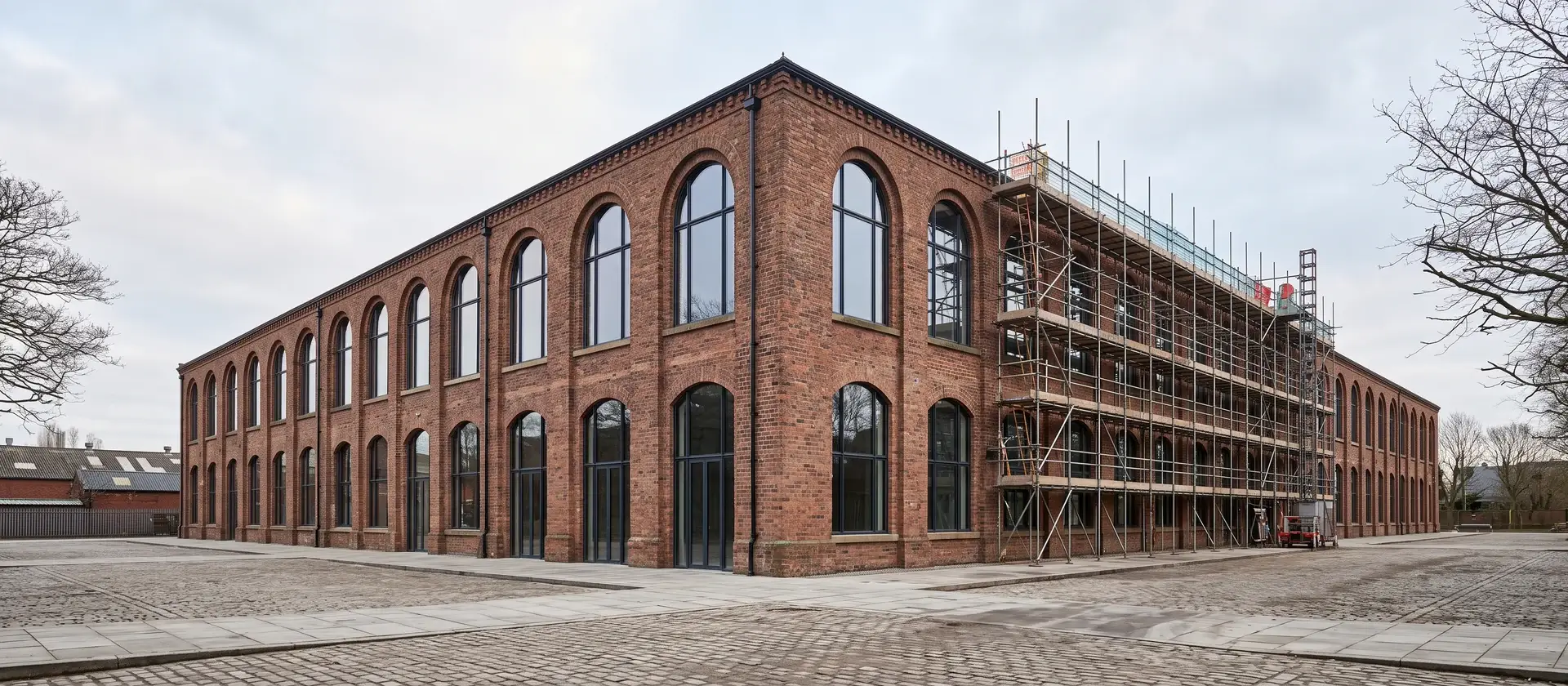
Antigua nave industrial de ladrillo en proceso de rehabilitación, con andamios y carpinterías nuevas instaladas en los grandes huecos originales
Una Fábrica de Cerveza, Unas Oficinas Vacías y una Farmacia del XIX: el Verano en que el Sector Dejó de Construir
Los cuatro proyectos de Alojamiento Flexible más comentados del verano tienen algo en común: ninguno se levanta sobre suelo residencial. Salen de una fábrica de cerveza en Sevilla, de unas oficinas agotadas en el barrio de Salamanca, de un edificio del XIX en Malasaña y de unas oficinas en Florencia. No es una moda estética, es la consecuencia directa de la regulación.
Fachada acristalada de un edificio de oficinas del distrito financiero al anochecer, con reflejos del cielo, ilustrativa de la financiación institucional del sector
El Dinero del Verano Enseña Dónde Está la Frontera: los Bancos Financian Edificios que ya Funcionan, no Formatos
Entre junio y agosto se anunciaron un fondo de 257 millones, una fusión con 250 bajo gestión, una financiación de 180 y la entrada de una aseguradora en el capital de una gestora. Puestas en fila, esas operaciones dibujan una línea muy clara: la deuda bancaria aparece cuando hay un activo estabilizado detrás, y solo entonces.