The Flexible Accommodation has positioned itself at the centre of the Spanish real estate debate, painting a picture full of contrasts and challenges. The recent "Intereconomía Inmobiliario". The report explored this duality, offering two perspectives that, although seemingly opposing, perfectly describe the current state of the sector.
On the one hand, the legal and regulatory view, set out by Javier Caro, partner at DA Lawyers. Caro defined the Flexible Accommodation as the "workhorse" of the administrations in their attempt to tackle the housing problem, a focus that is generating a remarkable legal uncertainty. He underlined the contradiction between the Housing Act and tourism regulationsThis is a collision that creates a confusing legal framework for operators and owners. This over-regulationThe fact that the regulations differ at state, regional and municipal level complicates the operation and can be a disincentive to investment.
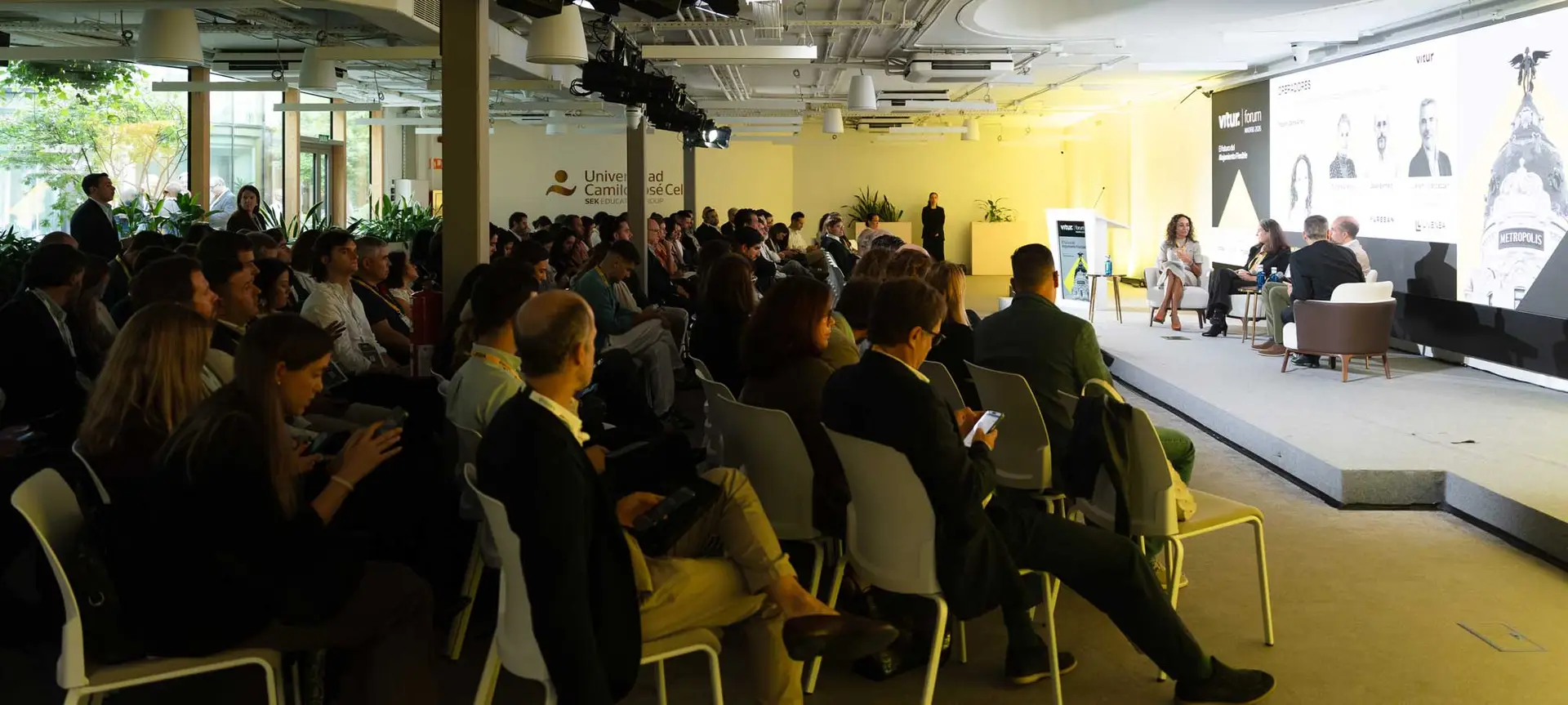
In the same programme, the other side of the coin was addressed: the unstoppable investment boom. The conclusions of the recent VITUR FORUM MADRIDa reference meeting point for the Flexible Accommodation in Spain, which brought together the most important players in the sector. As discussed with Carlos Pérez-Lanzac, CEO of VITURThis is the picture described by the sector:
Flex Living is consolidating its position as the "Diamond" of Real Estate Investment in Spain, which has ceased to be a corporate niche to become one of the most dynamic and attractive categories of the Spanish real estate scene. According to a report presented at Vitur Forum Madrid, this segment has increased its stock fivefold since 2020 and is expected to triple again by 2028, driven by institutional capital. The sector already has 7,800 new beds under development in Spain, with Madrid, Valencia, Barcelona and Malaga as the main hubs.
What is accelerating this growth?
Pérez-Lanzac stressed that the sector's evolution is unstoppable thanks to several contextual factors:
1). Flexible Accommodation caters to a larger and more resilient segment of demand that requires temporary solutions or transitional stays, usually less than one year. This demand includes:
- Teleworkers.
- Corporate accommodation.
- Visitors for training courses, events or congresses.
2). Given the shortage of residential land, investors are opting for the conversion of tertiary land; helping to alleviate the current need for transitional accommodation.
- Technology is central to the operation of Flex Living because:
- It allows for more efficient use of the operation.
- It optimises processes and compensates for gaps in human capital.
- Increased physical and digital connectivity facilitates flexible working and commuting, increasing the volume of floating population in mature tourist destinations and cities.
Legal and regulatory uncertainty.
Despite its enormous potential, legal uncertainty remains a major challenge.
Different flex verticals are hybrids between a residence and serviced accommodation, creating legal uncertainty at certain extremes and inconsistencies in regulation at the regional level.
This lack of homogenisation hinders the expansion of large brands seeking to operate throughout Spain.
Flex Living as a Decompression Pathway:
Flex Living could help to "de-stress the housing market considerably"; to give a second life to a high volume of assets that are out of the market; to satisfy an accommodation demand that would otherwise put pressure on the limited traditional housing stock; and to offer a new sustainable investment avenue.
The paradox, as exposed in the Intereconomía programme, is evident. While an expert such as Javier Caro warns of a complex legal framework, the conclusions presented by Carlos Pérez-Lanzac confirm an overwhelming investment reality. Curiously, both analyses converge on a crucial point: legal uncertainty and the lack of regulatory homogenisation are the great challenge to be overcome.
The future of the Flexible Accommodation in Spain will depend on the capacity of the administrations to create an intelligent and coherent legal framework that, without renouncing land use planning, provides the legal certainty that the "diamond" of real estate investment needs to continue to shine.
You can listen to the full analysis in the programme Intereconomía Inmobiliario of 09/10/2025.