Flexible Accommodation: A Booming Sector Driven by Investment and Positive Returns

The Flexible Accommodation sector is attracting increasing attention in the Spanish real estate market, reflecting a shift in housing needs and offering new opportunities for managers and investors alike. Recent news of companies active in this space, such as All Iron and Argis, underlines the momentum and growth potential of this segment.

All Iron, a socimi focused on Flexible Accommodation assets, has reported positive figures that demonstrate the health of its operation. During the first quarter of 2025, the company recorded a remarkable 21% increase in revenues1.6 million euros. On a comparable basis, this growth was 4%. Particularly relevant is the increase in accommodation rental income, which rose by 24% to EUR 1.25 million (up 3% on a like-for-like basis).

Operating performance was also strong. All Iron's earnings before interest, taxes, depreciation and amortisation (ebitda) grew by a significant 35% to €898,000. This raised the ebitda margin on revenues to 55%, exceeding the figure for the same period last year by 6 percentage points. The improvement was attributable to the higher revenue contribution and the reactivation of activity, including the launch of new properties in Bilbao and Barcelona. Average flat occupancy was 85% in the quarter, representing an increase of 6 points compared to the prior year. Despite changes in seasonality, such as the shift of the Easter effect, average prices remained stable at around 105 euros per flat. The socimi has also been active on the financial front, distributing a dividend of 14 cents per share, equivalent to a yield of 1.2%, and carrying out a capital increase of 10.725 million euros in April 2025 to finance new acquisitions. Its current portfolio consists of 19 assets with 927 units, most of which are already operational or in advanced stages of development. The net debt level stands at 36% of the portfolio value.

On the other hand, Argis, a specialist residential property manager, is strengthening its position in Flexible Accommodation with ambitious expansion plans. The firm plans to deliver 1,500 flats under this model during the current year. In addition, it has projects in the pipeline that will allow it to achieve the 5,000 units of Flexible Accommodation over the next three years. Argis is finalising the acquisition of strategic land, with a potential investment capacity of €150 million for further growth in this sector. This investment is part of a €250 million fund with an estimated total investment volume of €700 million.

Argis defines Flexible Accommodation (or flex living) as a response to new urban dynamics and mobility, considering that the traditional housing model is no longer adapted to the current reality. Its proposal is based on buildings operated in a similar way to aparthotels, designed for medium-term stays, generally between two and nine months. This model is aimed at a wide range of profiles, including postgraduate students, professionals with temporary jobs, people in life change processes or medical patients. Argis does not seek to compete in the mass market, but focuses on solutions for the extremes, from compact units to high-value housing. The company's strategy is not to hold on to assets for the long term, but to consolidate the portfolio for later sale, keeping its operator Flipco as manager. Its investors are mostly international institutional investors, complemented by family capital. The firm has evolved from an opportunistic investor, specialising in resolving complex situations, to an integrated developer that controls all phases of development.

Both All Iron's operating results and Argis' investment and expansion plans reflect the dynamism of the Flexible Accommodation market in Spain. This sector is positioned as an innovative response to the changing demands of society and as an area of growing interest for specialised real estate investment.

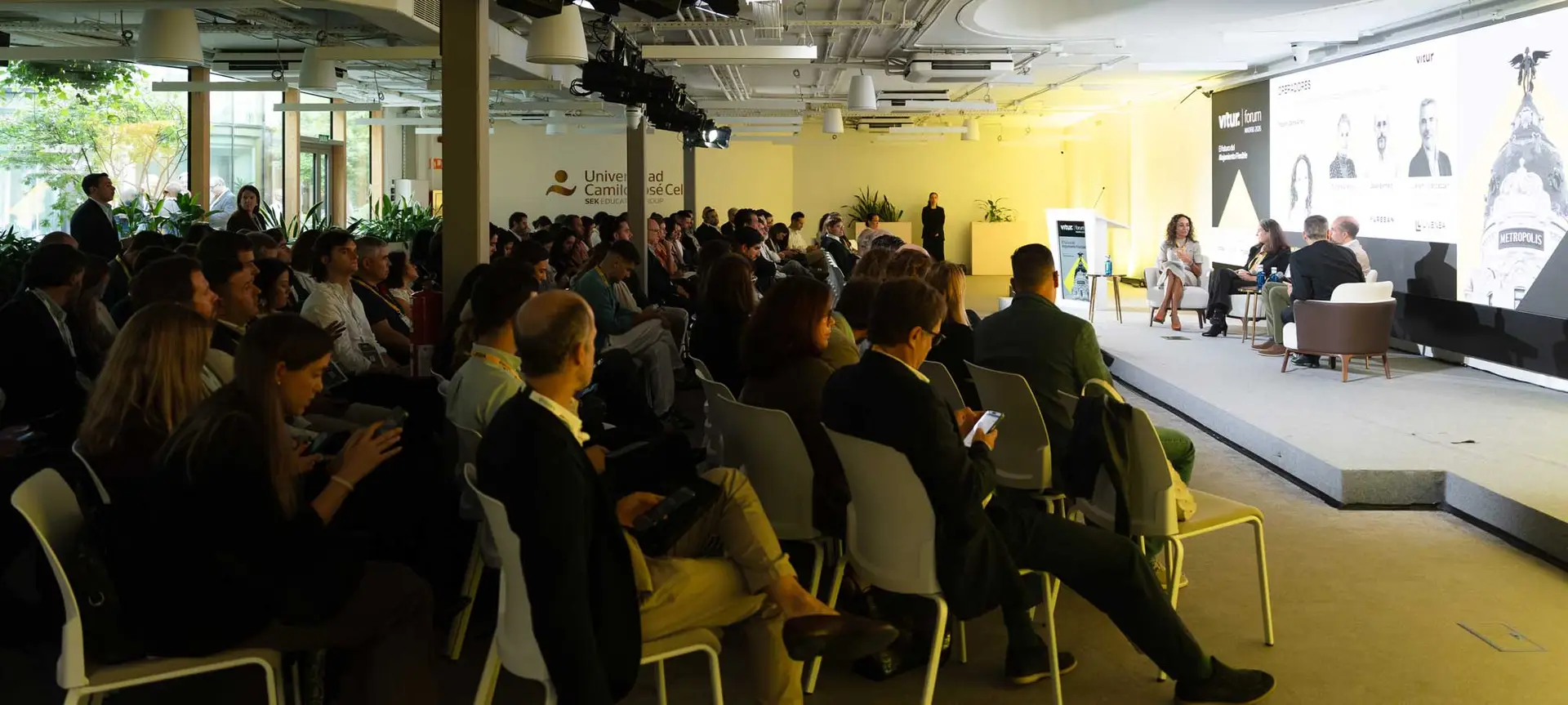
The next Vitur events will be held in Madrid el 15 de octubre and in Seville on November 26th, and will once again be the meeting point for operators, investors and companies in the sector to boost their business, establish strategic alliances with the various stakeholders involved and access all the news, trends and opportunities in the sector from leading speakers and companies.

Continue reading

Piscina y terraza de un hotel mediterráneo de estilo italiano de los años sesenta al atardecer, ilustrativa del segmento lifestyle premium en Ibiza
De Operar a Poseer: Grupo Ramat Paga 60 Millones por el Mongibello Ibiza, el Hotel que Fue de la Familia Matutes
Stoneweg y Bain Capital han vendido al Grupo Ramat y a un grupo de inversores privados el hotel que compraron en 2022 y reposicionaron después. El comprador es la misma casa que lleva cuatro años gestionándolo, y su consejero delegado, Marc Rahola Matutes, recupera así un activo que perteneció a Palladium Hotel Group, el grupo de su familia.
Interior luminoso de un estudio con cocina integrada y balcón abierto a una calle del centro histórico de una ciudad andaluza, ilustrativo del formato de apartamento turístico
OD Hotels Estrena en el Centro de Málaga 22 Apartamentos sin Restaurante, sin Bar y sin Recepción al Uso
Ocean Drive Málaga ha abierto en Cortina del Muelle con 22 apartamentos turísticos y una lista de ausencias que define el proyecto: no hay restaurante, ni bar, ni terraza, ni zonas comunes de peso. La llegada del huésped se resuelve en un hall con una mesa. La cadena lo resume en una frase: el barrio es el lobby.
Villa de estilo colonial con piscina y palmeras en un complejo turístico del Caribe al atardecer, imagen ilustrativa del segmento de las branded residences
Los Propietarios de un Four Seasons del Caribe Reclaman 100 Millones: la Letra Pequeña de las Branded Residences
Pagaron 100.000 dólares de entrada y más de 13.000 al año para vivir bajo una de las marcas más reconocidas de la hostelería de lujo. Cuatro años después de un incendio, los dueños de 89 villas del Four Seasons Resort Nevis dicen que solo hay una valla rodeando los escombros, y han llevado a la propiedad ante los tribunales de Delaware.
Recepción automatizada vacía de un edificio de apartamentos con un terminal de autoservicio junto a la entrada, ilustrativa del peso de la tecnología en la operativa del alojamiento
Booking Sitúa en Menos del 1% las Noches que le Llegan desde la IA, y en Doble Dígito el Ahorro que sí le Está Dando
El director financiero del mayor grupo de distribución turística del mundo puso cifra a algo de lo que el sector lleva dos años hablando sin datos: las reservas que llegan a Booking desde los modelos de lenguaje no alcanzan el 1% de sus noches y llevan trimestres sin moverse. Donde la inteligencia artificial sí está dejando dinero es en la atención al cliente.
Detalle de un cuadro eléctrico y contadores modernos en el cuarto de instalaciones de un edificio residencial, ilustrativo de la digitalización de la gestión de suministros
Cuatro Proptech Atacan lo que la Promoción Sigue Haciendo a Mano: Suministros, Preventa, Liquidez Sénior y Grietas
El Clúster de la Edificación, Asprima y la Universidad Politécnica de Madrid reunieron a cuatro compañías tecnológicas que no venden vivienda, sino que arreglan procesos internos del sector. Zenova digitaliza los suministros, Framearq lleva la realidad virtual a la preventa, Jubenial busca liquidez para el propietario mayor y Feelbat monitoriza estructuras con sensores.
Calle de un desarrollo urbano reciente en el norte de Madrid con bloques residenciales contemporáneos, aceras anchas y arbolado joven, ilustrativa del ecosistema de Alojamiento Flexible de Valdebebas
Valdebebas Reúne 5.641 Unidades de Alojamiento Flexible y Seis Operadores: Apenas el 28% Está en Explotación
El barrio del norte de Madrid concentra 5.641 unidades operativas o en desarrollo, según el departamento de Advisory de Activum. De ellas, apenas 1.603 funcionan ya: por cada unidad en explotación hay dos y media en obra. Seis operadores conviven en el mismo ámbito, algo que no ocurre en ningún otro punto de España.