The Future of Travel: Key Trends and their Impact on Flexible Accommodation

The travel landscape is constantly evolving, and a recent Booking.com survey presented at IHIF EMEA 2025 reveals fascinating trends that directly impact how we think about Flexible Accommodation. While the report focuses on the rise of artificial intelligence (AI) in travel planning and other emerging preferences, we can glean valuable insights into the changing needs of travellers and how Flexible Accommodation adapts to them.

AI Adoption: A Threat or an Opportunity for Discovery?

A surprising finding is the rapid adoption of AI by all generations in travel planning. From Millennials (54%) to Baby Boomers (30%), a significant number of travellers are using AI to organise their getaways. However, Flavio Leoni, regional director of global accounts at Booking.com, warns that AI could limit the discovery of new destinations by delivering results based on the user's biases and prior information. Despite this, Leoni stresses that travel companies must adapt to the ubiquity of AI to understand their customers' needs. For the Flexible Accommodation sector, this means that platforms and providers must be smart in how they present their offerings through AI-powered channels, ensuring that flexibility and diversity of choice are visible.

Multigenerational Travel and the Importance of Flexibility

One notable trend is the rise of multigenerational travel, driven by Baby Boomers who are investing their savings in shared experiences with their families. Some 46% of Baby Boomers globally and 42% in Europe have adopted this practice. In addition, many Baby Boomers finance their children's travel, with 52% of young people admitting that their parents paid for a trip in the last year. This trend underlines the growing need for accommodation that can accommodate large and diverse groups, offering flexibility in terms of space, amenities and length of stay. Flexible accommodation, such as serviced flats, co-living or even the possibility of connecting hotel rooms, presents itself as an ideal solution for these family dynamics.

Inclusive Travel and Accommodation Adaptability

Another important trend mentioned is the increase in inclusive travel for neurodivergent people. This implies that accommodations need to consider a wider range of needs and offer adapted environments. Flexible Accommodation, by its nature, can often provide more control over the environment and offer customised options to meet diverse needs, making it an attractive option for this segment of travellers.

Stays in Escala and the Opportunity of Accommodation Nearby

Finally, the growth of long-haul travel is leading more people to make stopovers. Leoni points out that travellers no longer want to stay at the airport during these stopovers, but want to explore the location. This creates an opportunity for Flexible Accommodation close to airports, offering short and convenient stays for those who want to make the most of their stopovers.

In summary, the trends presented by Booking.com at IHIF EMEA 2025, while focused on AI and the changing preferences of travellers, indirectly highlight the growing importance of Flexible Accommodation. The need to accommodate multi-generational groups, offer inclusive and convenient options for short stays during stopovers are all factors driving demand for accommodation solutions that go beyond the traditional hotel. The future of travel demands flexibility, and the accommodation sector must be prepared to meet these new demands.
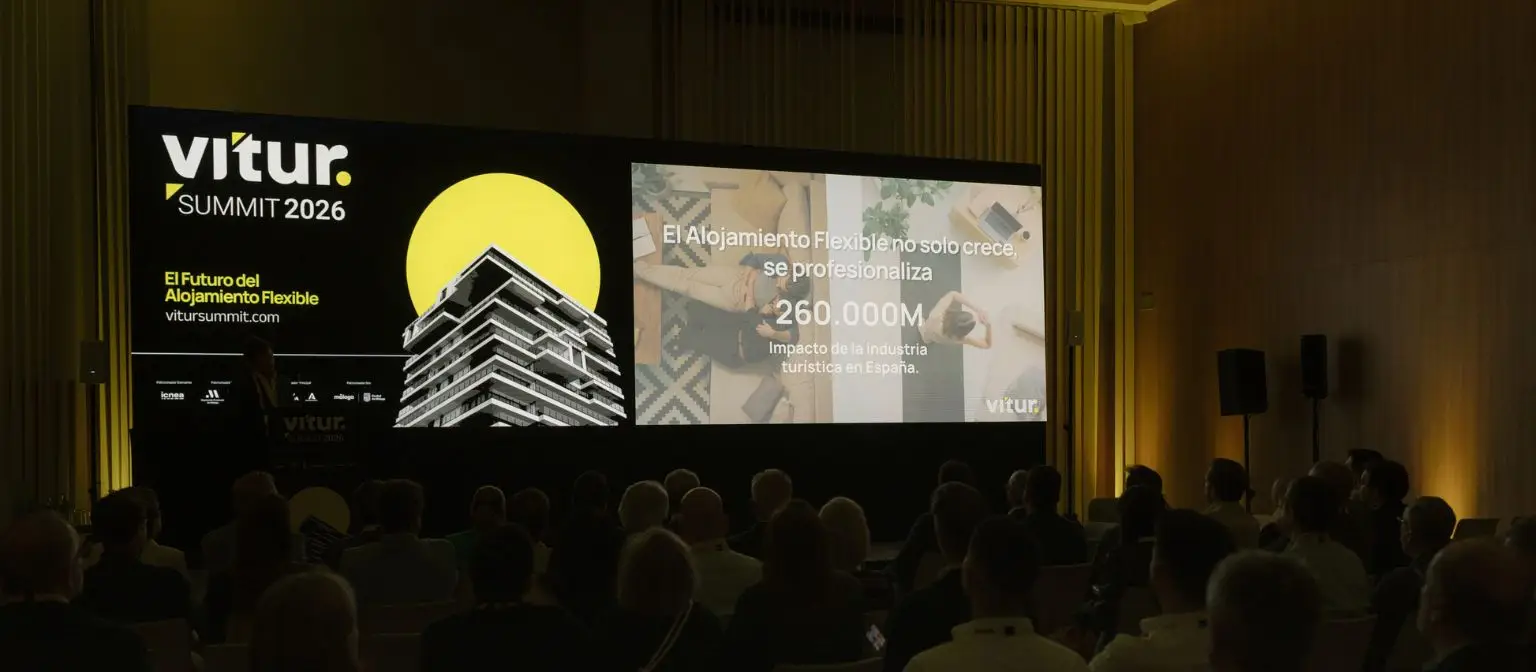
The next Vitur events will be held in Madrid el 15 de octubre and in Seville on November 26th, and will once again be the meeting point for operators, investors and companies in the sector to boost their business, establish strategic alliances with the various stakeholders involved and access all the news, trends and opportunities in the sector from leading speakers and companies.

Continue reading

Bloques de viviendas de una gran ciudad europea al atardecer, con fachadas de distintas épocas, imagen ilustrativa del debate sobre el acceso a la vivienda
Bruselas No Prohíbe, Habilita: el Borrador que Daría Cobertura Legal a las Ciudades para Limitar la Vivienda no Habitual
Un borrador de la Affordable Housing Act al que han tenido acceso Euractiv y Reuters permitiría a las ciudades limitar el uso de vivienda residencial para fines distintos de la residencia principal. Contempla topes cuantitativos y cláusulas de derecho adquirido para los operadores ya establecidos, y exige demostrar tres años de perjuicio antes de aplicar cualquier restricción.
Fachada de un bloque de apartamentos frente al mar en la costa mediterránea española, con balcones y toldos, en un día de verano
Los Apartamentos Turísticos Repiten Julio con un 6,2% más de Precio y Estancias un 7,3% más Cortas
Las pernoctaciones en apartamentos turísticos no se movieron ni un punto en julio respecto al año pasado, según el INE. Lo que sí cambió fue todo lo demás: los precios subieron un 6,2%, la estancia media cayó un 7,3% hasta 4,8 noches y el cliente español ganó peso mientras el extranjero lo perdía.
Palacio histórico italiano rehabilitado junto a un lago al atardecer, ilustrativo de la rehabilitación patrimonial que exigen las residencias de marca en Italia
Marriott y Accor Empujan las Branded Residences en Italia, el País que se Quedó Atrás de España y Portugal
El desarrollo de residencias de marca en Italia ha ido por detrás del español y el portugués pese a tener los ingredientes a favor. Eso está cambiando: Marriott acaba de anunciar su primer proyecto residencial en el país y Accor ve recorrido en varias regiones. Savills calcula que el sector global pasará de unos 910 complejos terminados a cerca de 1.747 en 2032.
Antigua nave industrial de ladrillo en proceso de rehabilitación, con andamios y carpinterías nuevas instaladas en los grandes huecos originales
Una Fábrica de Cerveza, Unas Oficinas Vacías y una Farmacia del XIX: el Verano en que el Sector Dejó de Construir
Los cuatro proyectos de Alojamiento Flexible más comentados del verano tienen algo en común: ninguno se levanta sobre suelo residencial. Salen de una fábrica de cerveza en Sevilla, de unas oficinas agotadas en el barrio de Salamanca, de un edificio del XIX en Malasaña y de unas oficinas en Florencia. No es una moda estética, es la consecuencia directa de la regulación.
Fachada acristalada de un edificio de oficinas del distrito financiero al anochecer, con reflejos del cielo, ilustrativa de la financiación institucional del sector
El Dinero del Verano Enseña Dónde Está la Frontera: los Bancos Financian Edificios que ya Funcionan, no Formatos
Entre junio y agosto se anunciaron un fondo de 257 millones, una fusión con 250 bajo gestión, una financiación de 180 y la entrada de una aseguradora en el capital de una gestora. Puestas en fila, esas operaciones dibujan una línea muy clara: la deuda bancaria aparece cuando hay un activo estabilizado detrás, y solo entonces.
Villa de lujo con piscina privada dentro de un complejo hotelero al atardecer, ilustrativa de las residencias de marca acogidas a programas de alquiler
Las Branded Residences Fallan en el Momento de la Reserva por Decisiones Tomadas Años Antes, en la Mesa de Diseño
Alquilar una residencia de marca por unos días promete una casa de varios millones con el servicio de un hotel de cinco estrellas. Cumplirlo es otra cosa: el inventario a veces ni siquiera aparece en los sistemas de distribución, la propiedad y la gestión pueden ir por separado y dos unidades del mismo edificio pueden no parecerse en nada.